The Cheapest Heating Fuel for the 2015–2016 Season
Original article in translation · 27 October 2015
My apologies for the delay.
Although slightly late after the heating season began, I am publishing what have now become my regular calculations comparing the cost of a kilowatt-hour of heat produced from various fuels.
As usual, there are two tables below: one for private homes and one for industrial and commercial premises (non-residential property). These two types of consumers were charged under different tariff structures for the main fuels — natural gas and electricity — so I calculate the comparisons separately.
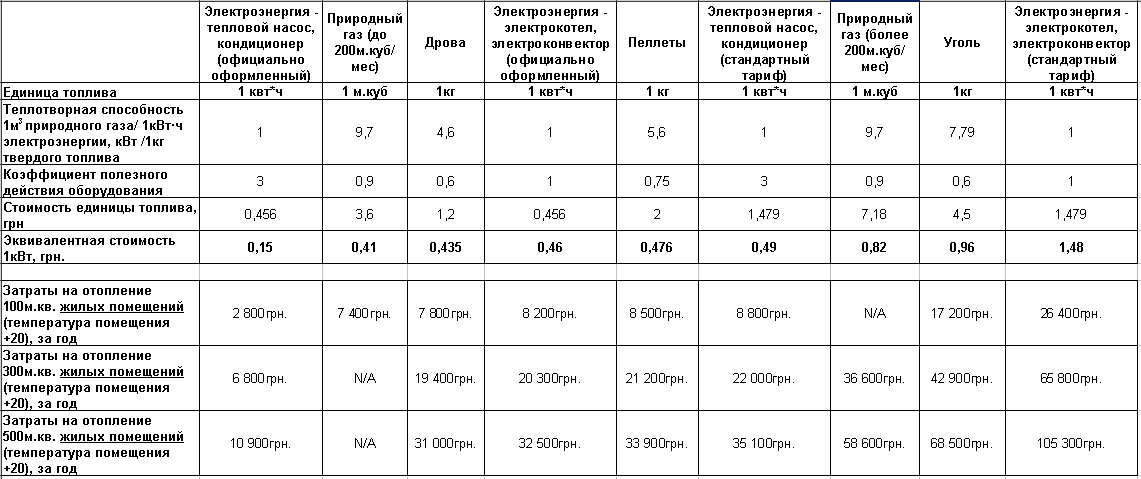
For residential homes, heat pumps have unexpectedly taken the lead. Provided such a system is officially registered as an “electric heating installation”, they offer the lowest cost per kilowatt-hour of heat! Without the necessary registration, however, such a system could ruin its owner financially. In theory, with good insulation, it should be possible to heat a house of up to 500 m² economically.
Heating costs for private homes — author’s findings for 2015–2016
| Heating option | Finding from the original analysis |
|---|---|
| Heat pump with registered electric-heating tariff | Lowest cost per kWh of heat in the author’s comparison |
| Natural gas under the 200 m³ monthly social allowance | Next most economical option under the assumptions used |
| Electricity on the standard tariff | Costlier than the special registered electric-heating tariff |
| Pellets and firewood | More expensive in this comparison than special-rate electric heating and gas |
The English table conveys the conclusions in the author’s text, but does not reproduce every numeric cell of the original image. Complete original numeric table in Russian.
Looking at the table for private homes, we see that natural gas follows electric heating by a considerable margin, even under the “social allowance” of 200 m³ of gas per month (an allowance that, admittedly, only owners of small, well-insulated houses are likely to stay within). Standard-tariff electricity and solid fuels (pellets and firewood) follow.
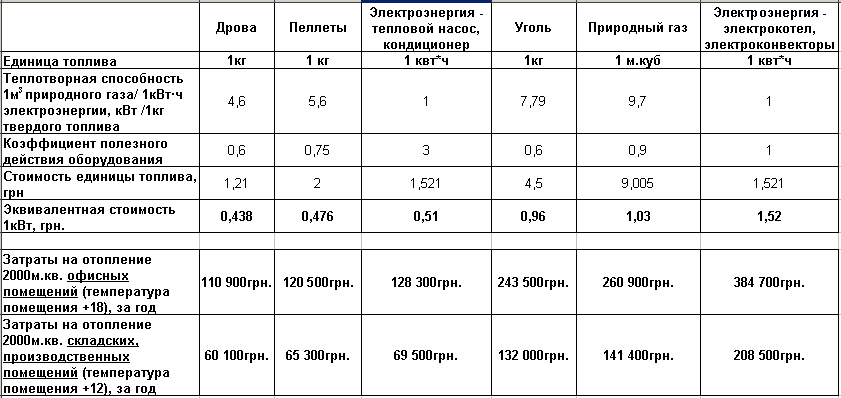
There are no surprises for commercial premises. As has become customary, solid fuels provide the lowest cost per kilowatt-hour, while the figures also reveal the regulator’s policy of encouraging heat-pump electricity consumption. Natural gas prices are off the scale.
Heating commercial premises — author’s findings for 2015–2016
| Energy source | Finding from the original analysis |
|---|---|
| Solid fuels (pellets and firewood) | Lowest heat-production cost in the author’s comparison |
| Electricity for heat pumps | Tariff incentives favoured heat-pump electricity use |
| Natural gas | High cost relative to the other options compared |
The English table conveys the conclusions in the author’s text, but does not reproduce every numeric cell of the original image. Complete original numeric table in Russian.
For additional clarification, please contact me by telephone.
Information sources:
http://www.nerc.gov.ua/?id=15010
http://www.nerc.gov.ua/?id=15030
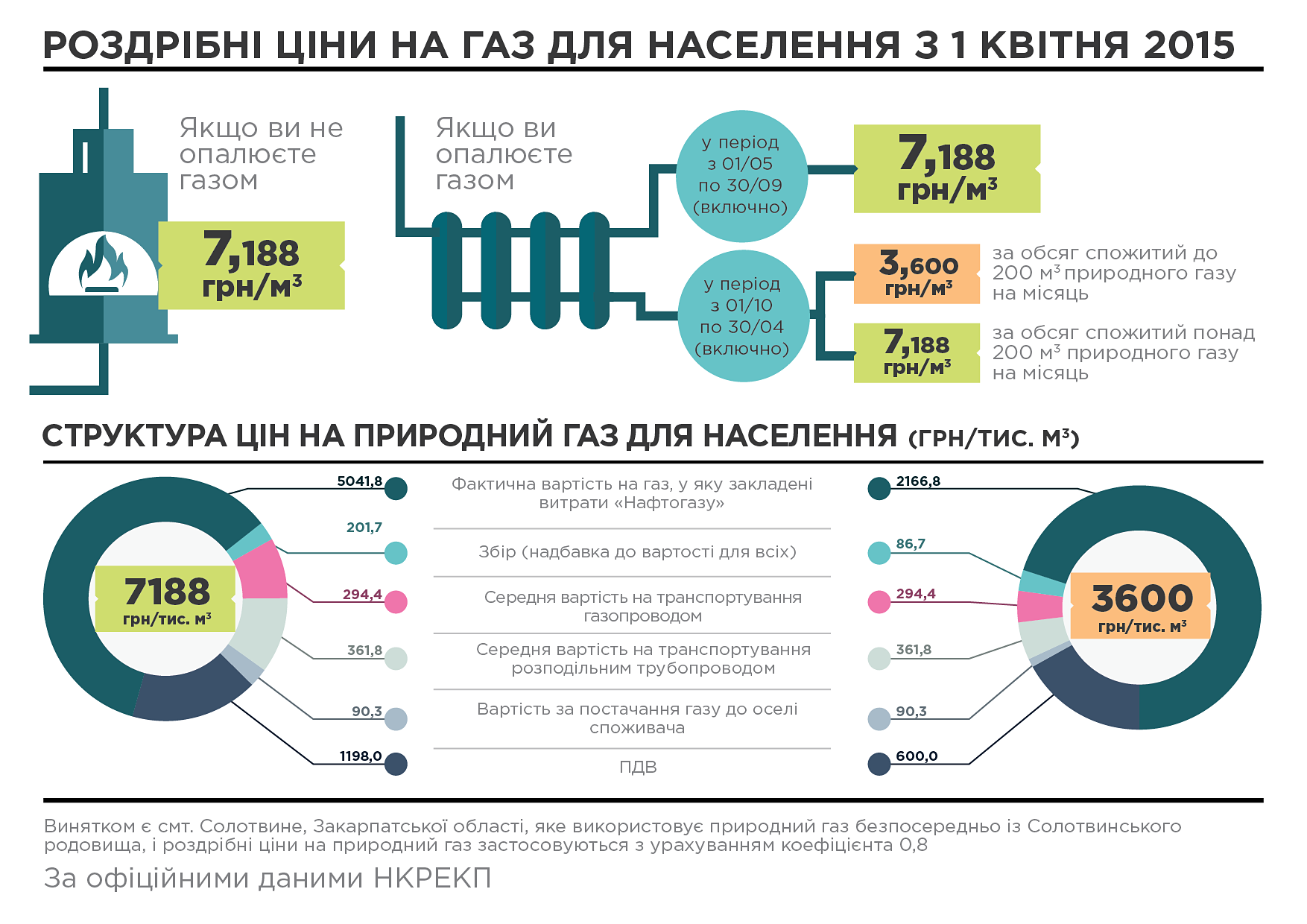
The second link has an excellent infographic:
Historical natural gas tariff infographic (2015)
| Item | Explanation |
|---|---|
| Tariff period | Year 2015 — not current pricing |
| Consumer categories | Residential gas tariffs under the regulations of that period |
| Full numeric infographic | Available in the original image linked below |
The source infographic’s numbers were not transcribed without independent verification. Follow the original-image link for full historical values. Complete original numeric table in Russian.
Important: all tables and tariffs refer to the 2015–2016 heating season, not current heating costs.
Original in Russian · Energy efficiency archive
Also read this article in Ukrainian: Ukrainian translation